
As years pass by, carrying us ever farther from the Great War, the Second World War, and the conflicts that followed, Remembrance offers us the chance to reflect on the many faces of service that came together in the quest for freedom.
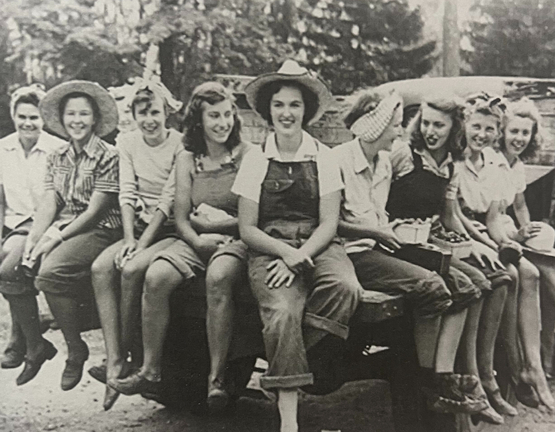 Gloria Carter’s is but one of countless such stories.
At the age of 15, Gloria joined a wave of some 40,000 young women who volunteered to keep the wheels of agriculture turning in Ontario’s fields and orchards during the Second World War and its difficult aftermath in Europe.
At the time, she was drawn by the promise of freedom and adventure in the Niagara farmland, where, in 1946, she joined three older friends to volunteer as part of the Ontario Farm Service Force — known affectionately as the Farmerettes. Her mother even changed her birth certificate so she could meet the age requirement.
 “I went because I wanted to get away from home for the summer,” Gloria says with a smile. “I’d never been anywhere… so it was an adventure for me to go with my friends.”
It was, she says, much like going to summer camp — only far more demanding, especially for girls with little or no experience in farm life.
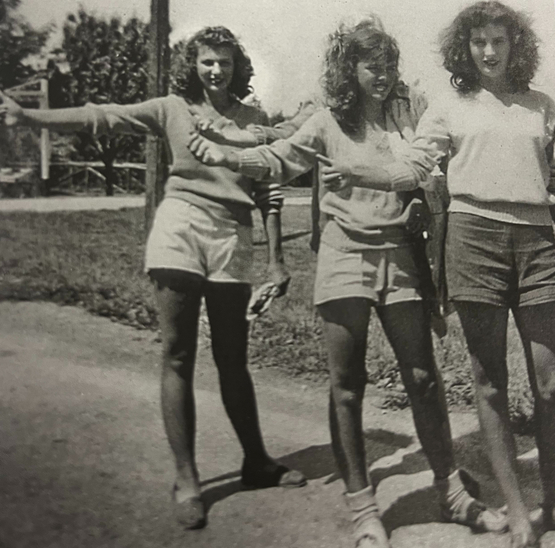 “We worked hard,” Gloria says. “I’ve never worked so hard in my life — but it was an adventure.”
The girls lived together in bunkhouses and sang songs as they worked in the fields. On their days off, they’d sometimes hitchhike to St. Catharines, Niagara Falls, or even Buffalo, New York — and they never had trouble getting a ride. The local people knew these young women were providing a desperately needed service during a difficult time.
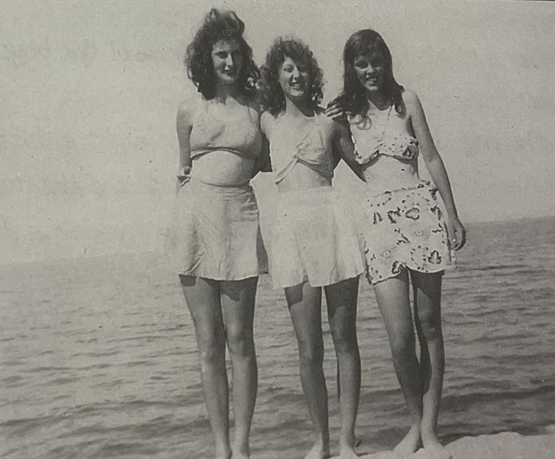 “The local people were wonderful,” Gloria recalls. “They appreciated that we were there to do the work, and we were treated well.”
At 15, Gloria thought little beyond the thrill of adventure that filled those first two summers. But now, at 94, as she sits in the library at her home in The Village of Arbour Trails reflecting on those days on the eve of Remembrance Day, she recognizes how deeply the experience shaped her.
“I grew up,” she says. “My mother always did my laundry and everything — that’s just how families were — but I learned how to look after myself. I learned to get along with people, and I came away with a nice sense of responsibility.”
And she served a purpose far greater than herself.
“I didn’t realize then that the food shortage overseas was so bad,” Gloria recalls. “What we picked fed people here and in post-war Europe. What I thought was a bit of fun turned out to be something that really mattered.”
Across two summers as a Farmerette, Gloria discovered independence, friendship, and purpose. What began as “a summer adventure” became a formative experience that shaped her values for life.
“It taught me responsibility, respect, and how to get along with people,” she says. “Your parents can’t teach you that — school can’t teach you that. You learn it by living it.”
Gloria’s story was featured in a recent documentary called We Lend a Hand: The Forgotten Story of Ontario Farmerettes. Click here to learn more.


