
During the height of the pandemic, when Ontario hospitals were stretched to their limits, a quiet pilot project was taking shape inside Erin Mills Lodge, a small Schlegel Village in Mississauga. What began as an urgent response to system pressure became something much more powerful — a glimpse of what long-term care can be when people living with dementia are truly seen, understood and supported.
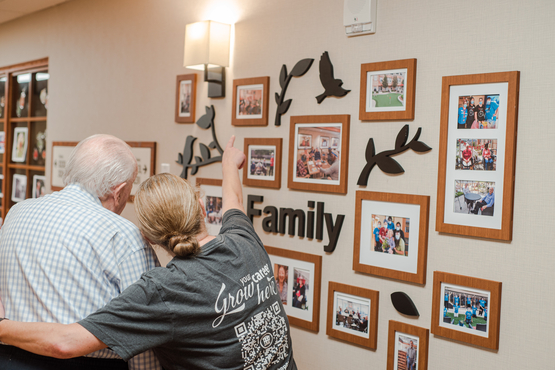 The Enhanced Supportive Neighbourhood (ESN) pilot welcomed people whose needs had become too complex for hospital environments and were too often deemed “unmanageable” elsewhere. Behind the clinical labels were husbands, fathers, wives and mothers and range of people struggling to find hope as loved ones’ lives had narrowed after months of restraint, medication and loss of independence.
Families noticed the difference almost immediately after ESN became an option for help.
One daughter described the move as “bringing new life back to Dad.” Another wife, exhausted and heartbroken after repeated hospital calls, said simply, “It’s like coming home to a family that understands me.” In a setting built around relationships rather than routines, people who had stopped eating began to enjoy meals again. Those who had lost mobility began walking. One couple danced.
This transformation didn’t happen by accident.
The ESN pilot at Erin Mills Lodge was grounded in Schlegel Villages’ Living In My Today philosophy — a social model of care that prioritizes dignity, engagement, emotional safety and human connection. Instead of asking how to control behaviours, the team asked different questions: Who is this person? What are they communicating? What do they need in this moment?
Environment mattered. Consistency mattered. Perhaps most importantly, people mattered.
The success of the pilot was driven by a deeply committed team, including Donna Dalupan, who played a central leadership role at Erin Mills Lodge during the trial. Donna helped shape the culture that allowed team members to slow down, build trust, and support residents using the least restrictive and most respectful approaches possible. Families saw it. Clinical partners saw it. And residents felt it.
 Experts who visited the neighbourhood saw something rare.
Internationally-respected dementia specialist Dr. Allen Power observed that despite the way residents had been described in medical files, nothing about the neighbourhood felt chaotic or unsafe. Instead, it felt calm, more “human”. It was a place to live, not a place to manage symptoms.
What the pilot revealed was simple but profound: hospitals are designed for acute illness, not for living. People recovering from long hospital stays don’t just need medical stabilization – they need emotional rehabilitation. They need belonging, time, patience and grace.
That learning is what fuels excitement as Schlegel Villages prepares to open a permanent Enhanced Supportive Neighbourhood at the Village of Ridgeview Court in the spring of 2026.
At Ridgeview Court, these lessons will live on within a purpose-built space, enhanced team member engagement, specialized clinical supports and entire Village grounded in the same relational approach that proved so powerful at Erin Mills Lodge. Once again under Donna Dalupan’s supportive leadership as Ridgeview Court’s General Manager, the ESN will offer people a place to stabilize, reconnect and prepare for their next home, while giving families something many hadn’t felt in a long time: peace of mind.
The Erin Mills Lodge pilot showed us what’s possible; Ridgeview Court is where that possibility becomes permanent.


